
Introduction
In today’s digital workplace, computers, smartphones, tablets, and other connected devices play an important role in business operations. However, every device connected to a network creates a potential entry point for cyber attackers.
Cyber criminals often target endpoints to steal information, install malware, launch ransomware attacks, or gain unauthorized access to company systems.
Endpoint Security Solutions help organizations protect devices from cyber threats by monitoring, detecting, and preventing malicious activities.
With the growth of remote work, cloud computing, and mobile technology, endpoint security has become a critical part of modern cybersecurity strategies.
What Are Endpoint Security Solutions?
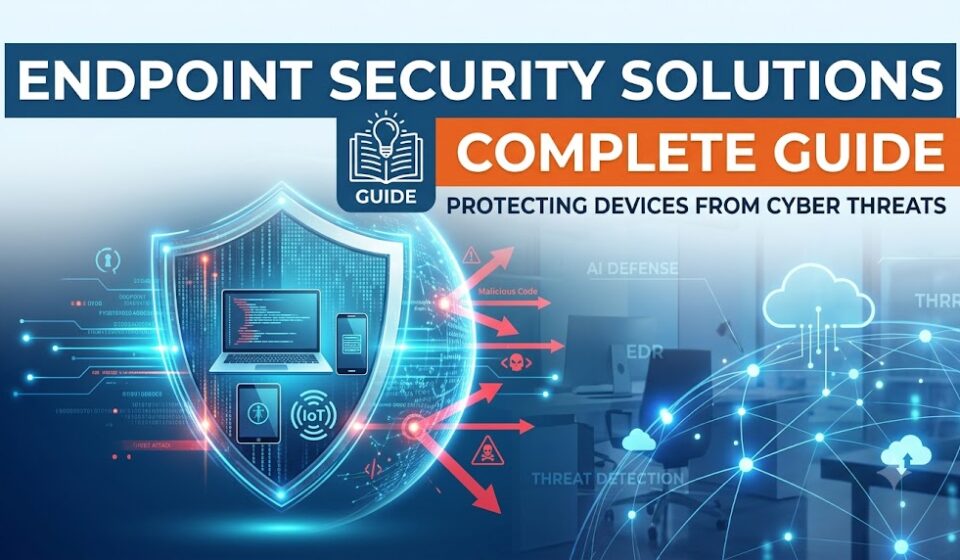
Endpoint security solutions are cybersecurity tools designed to protect devices connected to a network.
An endpoint can include:
- Desktop computers
- Laptops
- Smartphones
- Tablets
- Servers
- Internet of Things (IoT) devices
Endpoint security protects these devices by identifying threats, blocking attacks, and controlling access to sensitive resources.
Why Are Endpoint Security Solutions Important?
Organizations use thousands of connected devices every day. If one device becomes compromised, attackers may gain access to the entire network.
1. Protection Against Malware
Endpoint security solutions detect and block harmful software such as:
- Viruses
- Spyware
- Trojans
- Ransomware
- Worms
Advanced endpoint tools use artificial intelligence to identify unknown threats.
2. Preventing Ransomware Attacks
Ransomware attacks often begin through infected devices.
Endpoint security helps prevent ransomware by:
- Monitoring suspicious behavior
- Blocking malicious applications
- Protecting important files
- Detecting unauthorized changes
3. Securing Remote Workers
Remote employees often connect to company systems from different locations.
Endpoint security ensures:
- Devices remain protected
- Access is secure
- Company data stays private
4. Protecting Sensitive Business Data
Endpoints often store valuable information.
Security solutions help protect:
- Customer data
- Financial documents
- Company files
- Employee information
Types of Endpoint Security Solutions
1. Endpoint Detection and Response (EDR)
EDR solutions continuously monitor devices and detect suspicious activities.
EDR provides:
- Real-time threat detection
- Investigation tools
- Automated responses
- Security alerts
Businesses use EDR to identify advanced cyber attacks.
2. Endpoint Protection Platform (EPP)
EPP solutions provide traditional device protection.
They include:
- Antivirus protection
- Malware detection
- Firewall features
- Web security
EPP is commonly used by businesses of all sizes.
3. Mobile Device Security
Mobile devices are increasingly used for business activities.
Mobile security solutions protect:
- Smartphones
- Tablets
- Business applications
- Mobile data
They prevent unauthorized access and data leakage.
4. Application Control Security
Application control manages which software applications can run on company devices.
It helps prevent:
- Unauthorized software installation
- Malicious applications
- Security risks
5. Data Loss Prevention (DLP)
Endpoint DLP prevents sensitive information from leaving company devices.
It controls:
- File sharing
- Data transfers
- External storage usage
Features of Modern Endpoint Security Solutions
Real-Time Threat Detection
Security systems continuously scan devices for suspicious activity.
Artificial Intelligence Protection
AI analyzes user behavior and identifies unusual patterns.
Automated Threat Response
Advanced solutions automatically isolate infected devices.
Device Management
Security teams can monitor and manage connected devices.
Cloud-Based Security
Cloud endpoint solutions provide flexible protection for modern businesses.
Endpoint Security Solutions for Businesses
Businesses require strong endpoint protection because employees access company resources from multiple devices.
Important security solutions include:
- Endpoint Detection and Response (EDR)
- Antivirus platforms
- Device management tools
- Identity protection systems
- Data security solutions
Large organizations often combine endpoint security with:
- Zero Trust Security
- Network Security
- Threat Intelligence
- Cloud Security
Endpoint Security for Small Businesses
Small businesses are common targets for cyber criminals because they may not have advanced security systems.
Essential endpoint protection includes:
- Reliable antivirus software
- Regular software updates
- Strong passwords
- Multi-factor authentication
- Secure backups
- Employee security training
Affordable endpoint security solutions can significantly reduce cyber risks.
Benefits of Endpoint Security Solutions
Better Cyber Protection
Endpoint security blocks threats before they spread.
Reduced Security Risks
Organizations can identify vulnerabilities and fix them quickly.
Improved Visibility
Security teams can monitor all connected devices.
Faster Incident Response
Automated tools help respond to attacks quickly.
Increased Compliance
Endpoint protection supports data security regulations.
Common Endpoint Security Challenges
Increasing Number of Devices
Organizations manage more devices than ever before.
Advanced Cyber Attacks
Hackers use sophisticated methods to bypass traditional security.
Remote Work Risks
Unsecured home networks can create security problems.
Device Management Complexity
Large organizations need effective tools to manage thousands of endpoints.
Future of Endpoint Security Solutions
AI-Powered Endpoint Protection
Artificial intelligence will improve threat detection and automated responses.
Behavioral Analysis
Security systems will analyze user behavior to identify unusual activities.
Cloud-Based Endpoint Security
More organizations will adopt cloud-managed security platforms.
Extended Detection and Response (XDR)
Endpoint security will become part of broader security systems combining multiple data sources.
How to Choose the Right Endpoint Security Solution?
Businesses should consider:
- Threat detection capabilities
- Device compatibility
- AI features
- Cloud support
- Ease of management
- Pricing
- Customer support
The right solution should provide strong protection without affecting device performance.
Conclusion
Endpoint Security Solutions are essential for protecting modern businesses from cyber threats. As organizations use more devices and remote work becomes common, securing endpoints has become a top priority.
By implementing advanced endpoint protection, businesses can prevent malware infections, reduce cyber risks, and protect valuable information.
A strong endpoint security strategy helps create a safer digital environment for organizations of all sizes.