
Introduction
Cyber attacks are becoming more advanced, targeted, and difficult to detect. Hackers use new techniques, malware, and sophisticated strategies to compromise businesses, governments, and individuals.
To stay ahead of these threats, organizations use Cyber Threat Intelligence to collect, analyze, and understand information about potential cyber risks.
Cyber threat intelligence helps security teams identify attackers, predict future threats, and take preventive actions before damage occurs.
In today’s digital environment, threat intelligence has become a critical part of modern cybersecurity strategies.
What Is Cyber Threat Intelligence?
Cyber Threat Intelligence (CTI) is the process of collecting, analyzing, and using information about cyber threats to improve security decisions.
It provides insights about:
- Hackers and cyber criminals
- Malware activities
- Security vulnerabilities
- Attack methods
- Emerging cyber risks
Threat intelligence allows organizations to understand who is targeting them, how attacks happen, and how to defend against them.
Why Is Cyber Threat Intelligence Important?
Organizations face thousands of cyber threats every day. Without proper intelligence, security teams may struggle to identify and respond to attacks.
1. Early Threat Detection
Cyber threat intelligence helps identify threats before they become serious problems.
Security teams can monitor:
- Suspicious activities
- Malware campaigns
- Hacker behavior
- Network risks
2. Prevents Cyber Attacks
By understanding attacker methods, organizations can strengthen security systems and prevent future attacks.
Threat intelligence helps businesses prepare for:
- Phishing attacks
- Ransomware
- Data breaches
- Malware infections
3. Faster Incident Response
When an attack occurs, threat intelligence provides valuable information to respond quickly.
It helps security teams:
- Identify attack sources
- Contain threats
- Remove malware
- Recover systems
4. Better Security Decision Making
Organizations can make smarter cybersecurity decisions using accurate threat information.
Security leaders can prioritize risks and invest in the right protection tools.
Types of Cyber Threat Intelligence
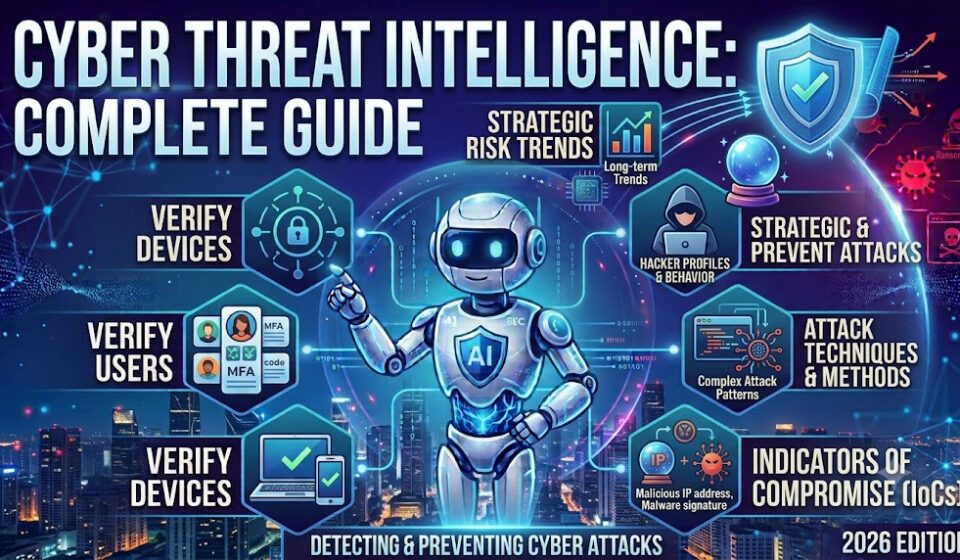
1. Strategic Threat Intelligence
Strategic intelligence focuses on long-term cyber risks and trends.
It helps business leaders understand:
- Industry threats
- Cyber crime trends
- Security investments
- Future risks
2. Tactical Threat Intelligence
Tactical intelligence focuses on attacker techniques and methods.
It provides information about:
- Malware behavior
- Attack techniques
- Exploitation methods
Security teams use it to improve defenses.
3. Operational Threat Intelligence
Operational intelligence provides details about ongoing cyber attacks.
It helps organizations understand:
- Current attack campaigns
- Hacker activities
- Potential targets
4. Technical Threat Intelligence
Technical intelligence focuses on specific indicators of cyber threats.
Examples include:
- Malicious IP addresses
- Malware signatures
- Suspicious domains
- Attack patterns
How Does Cyber Threat Intelligence Work?
1. Data Collection
Threat intelligence platforms collect information from multiple sources:
- Security systems
- Online sources
- Malware research
- Threat databases
- Network monitoring tools
2. Data Analysis
Collected information is analyzed to identify:
- Security risks
- Attack patterns
- Threat actors
- Vulnerabilities
3. Threat Detection
Security teams use intelligence reports to detect suspicious activities and possible attacks.
4. Security Response
Organizations take action based on intelligence findings.
Actions may include:
- Blocking malicious connections
- Updating security systems
- Improving security policies
Cyber Threat Intelligence Tools
Modern organizations use advanced threat intelligence platforms.
Common features include:
- Real-time threat monitoring
- Malware analysis
- Security alerts
- Threat reports
- Automated response
Popular cybersecurity technologies include:
- Security Information and Event Management (SIEM)
- Extended Detection and Response (XDR)
- Threat Intelligence Platforms (TIP)
- Endpoint Detection and Response (EDR)
Benefits of Cyber Threat Intelligence
Improved Threat Detection
Organizations can identify cyber risks faster.
Reduced Security Risks
Threat intelligence helps prevent attacks before they cause damage.
Better Incident Management
Security teams can respond quickly during cyber incidents.
Increased Security Awareness
Businesses gain better knowledge about current cyber threats.
Cost Savings
Preventing attacks reduces financial losses caused by data breaches.
Cyber Threat Intelligence for Businesses
Businesses can use threat intelligence to protect:
- Customer information
- Financial data
- Business applications
- Cloud environments
- Employee devices
Industries that commonly use threat intelligence include:
- Banking
- Healthcare
- Technology
- Government
- E-commerce
Challenges of Cyber Threat Intelligence
Large Amounts of Data
Security teams must analyze huge volumes of threat information.
False Alerts
Some intelligence systems may generate inaccurate warnings.
Lack of Skilled Professionals
Organizations need cybersecurity experts to analyze intelligence effectively.
Constantly Changing Threats
Attack methods continue evolving, requiring continuous monitoring.
Future of Cyber Threat Intelligence
Artificial Intelligence-Based Intelligence
AI will improve threat analysis and identify complex attack patterns.
Automated Threat Detection
Future systems will automatically detect and respond to cyber risks.
Predictive Cybersecurity
Organizations will use intelligence to predict attacks before they happen.
Real-Time Global Threat Sharing
Security communities will share threat information faster to improve protection.
How to Implement Cyber Threat Intelligence?
Organizations should:
- Identify important assets
- Choose reliable intelligence sources
- Use threat intelligence platforms
- Train security teams
- Monitor threats continuously
- Integrate intelligence with security tools
A strong threat intelligence strategy helps businesses stay prepared against cyber attacks.