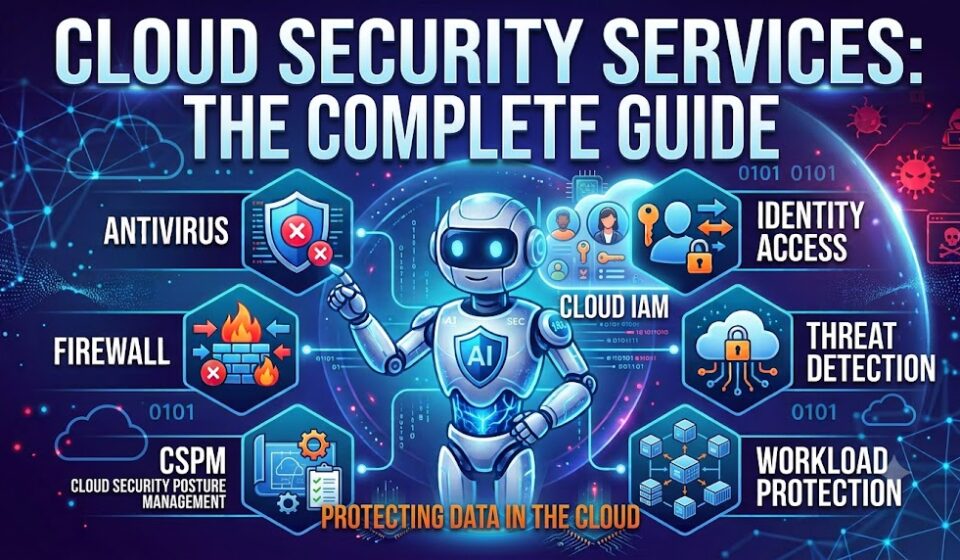

Introduction
Cloud computing has transformed the way businesses store data, manage applications, and operate digital services. Companies of all sizes are moving their infrastructure to cloud platforms because they offer flexibility, scalability, and cost savings.
However, as cloud adoption increases, cyber threats targeting cloud environments are also growing. Data breaches, unauthorized access, malware attacks, and misconfigured cloud systems can create serious security risks.
Cloud security services help businesses protect their cloud infrastructure, applications, and sensitive data from cyber threats. These solutions provide advanced security controls to maintain privacy, compliance, and business continuity.
What Are Cloud Security Services?
Cloud security services are technologies, tools, and solutions designed to protect cloud-based systems, applications, networks, and data from cyber attacks.
These services help organizations:
- Secure cloud applications
- Protect sensitive information
- Control user access
- Monitor security threats
- Prevent unauthorized activities
Cloud security services are used across different cloud environments, including:
- Public cloud
- Private cloud
- Hybrid cloud
- Multi-cloud environments
Why Are Cloud Security Services Important?
Businesses store valuable information in cloud environments, including customer data, financial records, and business applications.
Without proper security measures, attackers can exploit cloud vulnerabilities and steal sensitive information.
1. Protection Against Data Breaches
Cloud security services monitor cloud environments and protect data from unauthorized access.
They use encryption, authentication, and monitoring tools to prevent data theft.
2. Secure Cloud Applications
Many businesses use cloud-based applications for daily operations.
Cloud security solutions protect applications from:
- Malware attacks
- Unauthorized users
- Security vulnerabilities
- Data leaks
3. Identity and Access Protection
Unauthorized account access is one of the biggest cloud security risks.
Identity management solutions help control:
- Who can access data
- What resources users can access
- When access is allowed
4. Compliance and Data Protection
Many industries must follow strict data protection rules.
Cloud security services help organizations maintain compliance with security standards and privacy regulations.
Types of Cloud Security Services
1. Cloud Data Security
Cloud data security protects information stored in cloud environments.
Security methods include:
- Data encryption
- Backup solutions
- Access controls
- Data loss prevention systems
These technologies prevent unauthorized users from viewing or stealing sensitive information.
2. Cloud Identity and Access Management (IAM)
IAM solutions manage user identities and permissions.
Important features include:
- Multi-factor authentication
- Single sign-on
- User verification
- Role-based access control
IAM helps businesses prevent unauthorized access to cloud resources.
3. Cloud Security Monitoring
Cloud monitoring tools continuously analyze cloud activity.
They detect:
- Suspicious login attempts
- Unusual data transfers
- Security risks
- Potential cyber attacks
Real-time monitoring allows companies to respond quickly to threats.
4. Cloud Firewall Services
Cloud firewalls protect cloud networks from unauthorized traffic.
They help block:
- Malicious connections
- Network attacks
- Suspicious activities
Cloud firewall solutions provide security without requiring physical hardware.
5. Cloud Workload Protection
Cloud workload protection secures applications and services running in cloud environments.
It protects:
- Virtual machines
- Containers
- Cloud applications
- Business workloads
6. Cloud Security Posture Management (CSPM)
CSPM tools identify security weaknesses in cloud configurations.
They help organizations find:
- Incorrect settings
- Compliance issues
- Security gaps
CSPM improves overall cloud security management.
Benefits of Cloud Security Services
Enhanced Data Protection
Cloud security solutions protect valuable business information from cyber threats.
Reduced Security Risks
Advanced monitoring and threat detection reduce the chances of successful attacks.
Better Business Continuity
Cloud security helps businesses continue operations during security incidents.
Improved Customer Confidence
Strong security practices increase trust among customers and partners.
Cost-Effective Protection
Cloud-based security services reduce the need for expensive physical security infrastructure.
Cloud Security Challenges
Although cloud technology provides many benefits, organizations face several security challenges.
Misconfigured Cloud Systems
Incorrect cloud settings can expose sensitive data.
Account Hijacking
Attackers may steal user credentials to access cloud accounts.
Insider Threats
Employees or internal users may accidentally or intentionally expose data.
Lack of Security Knowledge
Organizations need skilled professionals to manage cloud security effectively.
Cloud Security Best Practices
Businesses should follow these practices to improve cloud protection:
- Use strong authentication methods
- Enable multi-factor authentication
- Encrypt sensitive data
- Regularly update security policies
- Monitor cloud activity continuously
- Conduct security audits
- Train employees about cyber risks
Future of Cloud Security Services
The future of cloud security will be shaped by advanced technologies.
Artificial Intelligence Security
AI-powered tools will improve threat detection and automated response.
Zero Trust Cloud Security
Zero Trust models will become more common by requiring continuous verification of users and devices.
Automated Security Management
Automation will help organizations identify and fix security problems faster.
Multi-Cloud Security
As businesses use multiple cloud platforms, advanced multi-cloud security solutions will become increasingly important.
How to Choose the Right Cloud Security Service?
Before selecting a cloud security provider, businesses should evaluate:
- Security features
- Cloud platform compatibility
- Data protection capabilities
- Compliance support
- Scalability
- Pricing
- Customer support
A reliable cloud security solution should match business requirements and future growth plans.