
Introduction
Traditional cybersecurity models were built around the idea of creating a strong network boundary and trusting users and devices inside that boundary. However, modern businesses now operate across cloud platforms, remote workplaces, mobile devices, and multiple digital environments.
Because of these changes, the traditional security approach is no longer enough. Cyber attackers can enter through stolen credentials, compromised devices, or vulnerable applications.
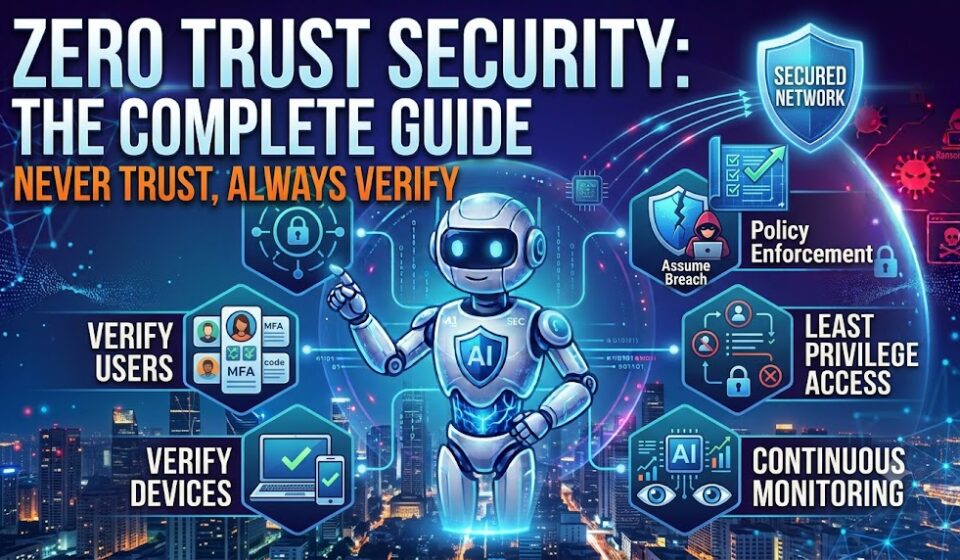
Zero Trust Security has emerged as a modern cybersecurity framework that focuses on continuous verification and strict access control. It follows a simple principle:
“Never trust, always verify.”
This approach helps organizations protect sensitive data, prevent unauthorized access, and reduce cyber risks.
What Is Zero Trust Security?
Zero Trust Security is a cybersecurity model that requires every user, device, application, and connection to be verified before accessing company resources.
Unlike traditional security models that automatically trust users inside a network, Zero Trust assumes that threats can exist anywhere.
Zero Trust security protects:
- Business applications
- Cloud services
- Company networks
- Employee devices
- Customer information
- Sensitive data
Why Is Zero Trust Security Important?
The digital environment has changed significantly. Employees work remotely, companies use cloud services, and cyber attacks are becoming more advanced.
1. Protects Against Stolen Credentials
Hackers often use stolen usernames and passwords to access company systems.
Zero Trust requires additional verification methods such as:
- Multi-factor authentication
- Device verification
- Identity checks
2. Reduces Insider Threats
Employees and internal users can accidentally or intentionally expose sensitive information.
Zero Trust limits access based on user roles and permissions.
3. Secures Remote Work
Remote employees connect from different locations and devices.
Zero Trust ensures secure access regardless of where users are located.
4. Protects Cloud Environments
Cloud applications require advanced access control.
Zero Trust security helps organizations protect cloud resources through continuous monitoring and verification.
Core Principles of Zero Trust Security
1. Verify Every User
Every user must prove their identity before accessing resources.
Authentication methods include:
- Password verification
- Biometric authentication
- Security tokens
- Multi-factor authentication
2. Verify Every Device
Organizations must ensure devices are secure before allowing access.
Device checks include:
- Security status
- Operating system updates
- Antivirus protection
- Device compliance
3. Least Privilege Access
Users should only receive access to the resources they need.
Benefits include:
- Reduced security risks
- Limited data exposure
- Better access control
4. Continuous Monitoring
Zero Trust continuously monitors user activity and network behavior.
It detects:
- Suspicious logins
- Unusual behavior
- Unauthorized activities
5. Assume Breach
Zero Trust operates with the assumption that attackers may already exist inside the network.
Security teams continuously search for threats and vulnerabilities.
Components of Zero Trust Security
Identity and Access Management (IAM)
IAM solutions manage user identities and control access permissions.
Features include:
- Single sign-on
- Multi-factor authentication
- User verification
- Access policies
Multi-Factor Authentication (MFA)
MFA adds extra security by requiring multiple verification methods.
Examples:
- Password + mobile code
- Fingerprint verification
- Security keys
Endpoint Security
Endpoint protection ensures devices accessing company resources are secure.
It protects:
- Laptops
- Smartphones
- Tablets
- Servers
Network Segmentation
Network segmentation divides networks into smaller sections.
This limits attacker movement if one area is compromised.
Security Analytics
Advanced analytics tools monitor activities and identify potential threats.
AI-powered systems help detect unusual patterns quickly.
Benefits of Zero Trust Security
Improved Data Protection
Zero Trust prevents unauthorized users from accessing sensitive information.
Better Cloud Security
It provides secure access to cloud applications and services.
Reduced Attack Surface
Limiting access reduces opportunities for attackers.
Enhanced Remote Work Security
Employees can securely access resources from anywhere.
Stronger Compliance
Zero Trust helps organizations meet security and privacy requirements.
Zero Trust Security for Businesses
Businesses implementing Zero Trust should focus on:
- Identity verification
- Access control policies
- Device security
- Data protection
- Continuous monitoring
Large organizations often combine Zero Trust with:
- Enterprise cybersecurity platforms
- Cloud security solutions
- Endpoint protection systems
- Threat intelligence tools
Zero Trust Security Challenges
Implementation Complexity
Moving from traditional security models to Zero Trust requires planning and investment.
Technology Integration
Organizations must integrate Zero Trust with existing systems.
Employee Training
Users need to understand new security processes.
Cost Considerations
Advanced security tools may require additional investment.
Zero Trust Security Best Practices
Organizations should:
- Identify sensitive data
- Create access policies
- Enable multi-factor authentication
- Monitor user behavior
- Secure all devices
- Regularly review permissions
- Automate security responses
Future of Zero Trust Security
Zero Trust will continue becoming a major cybersecurity strategy.
Future developments include:
AI-Based Identity Protection
Artificial intelligence will help identify suspicious user behavior.
Automated Access Decisions
Security systems will automatically determine whether access should be allowed.
Passwordless Authentication
Biometric and security key-based authentication will become more common.
Cloud-Native Zero Trust
Organizations will increasingly use Zero Trust models for cloud environments.
Conclusion
Zero Trust Security is becoming one of the most important cybersecurity approaches for modern organizations. As businesses adopt cloud services, remote work, and digital platforms, traditional security methods are no longer sufficient.
By verifying every user, device, and connection, Zero Trust helps organizations reduce cyber risks and protect valuable information.
Implementing Zero Trust security allows businesses to build a stronger, smarter, and more secure digital infrastructure.