
Introduction
In the modern digital era, businesses rely heavily on computer networks to store data, communicate with customers, manage operations, and deliver services. However, increasing cyber threats such as hacking, malware, ransomware, and unauthorized access have made network protection more important than ever.
Network security solutions help organizations protect their networks, devices, applications, and sensitive information from cyber attacks. A strong network security strategy ensures business continuity, prevents data breaches, and improves overall digital safety.
This article explains what network security solutions are, their importance, types, benefits, and future trends.
What Are Network Security Solutions?
Network security solutions are technologies, tools, and practices designed to protect computer networks from unauthorized access, cyber threats, and security vulnerabilities.
These solutions monitor network traffic, identify suspicious activities, block attacks, and protect sensitive business information.
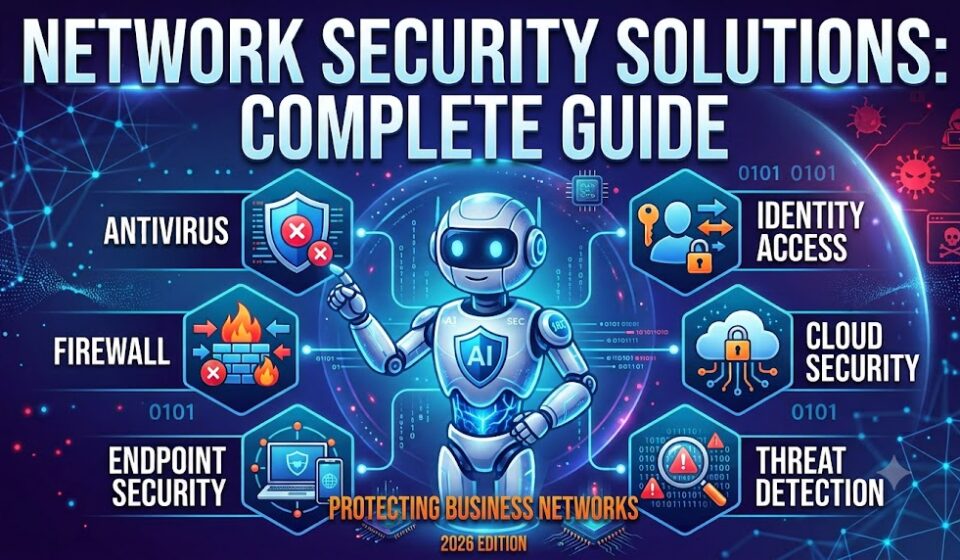
Network security solutions include:
- Firewalls
- Intrusion detection systems
- Intrusion prevention systems
- Virtual private networks (VPNs)
- Network monitoring tools
- Access control systems
- Security management platforms
These technologies work together to create a secure digital environment.
Why Are Network Security Solutions Important?
Businesses handle large amounts of confidential information every day. Without proper network security, attackers can exploit vulnerabilities and cause serious damage.
1. Protection Against Cyber Attacks
Cyber criminals use various methods to attack networks, including phishing, malware, ransomware, and unauthorized access attempts.
Network security solutions help detect and block these threats before they cause damage.
2. Preventing Data Breaches
A data breach can expose sensitive information such as:
- Customer records
- Financial details
- Business documents
- Employee information
Network security tools help protect important data from being stolen.
3. Secure Remote Access
With the growth of remote work, employees often access company networks from different locations.
VPNs and secure access solutions allow employees to connect safely without exposing business systems to risks.
4. Maintaining Business Operations
Cyber attacks can stop business operations and cause financial losses.
Strong network security solutions help organizations maintain uptime and continue their services without interruption.
Types of Network Security Solutions
1. Firewall Security Solutions
A firewall acts as a protective barrier between internal networks and external threats.
Firewalls analyze network traffic and block suspicious connections.
Benefits include:
- Preventing unauthorized access
- Monitoring network activity
- Blocking malicious traffic
- Improving network control
2. Intrusion Detection Systems (IDS)
Intrusion Detection Systems monitor network activity and identify suspicious behavior.
IDS solutions help organizations detect:
- Unauthorized access attempts
- Malware activities
- Network attacks
- Security violations
3. Intrusion Prevention Systems (IPS)
IPS technology goes beyond detection by automatically stopping harmful activities.
It can:
- Block malicious traffic
- Prevent attacks
- Protect vulnerable systems
Many businesses use IDS and IPS together for better security.
4. Virtual Private Network (VPN) Solutions
VPN solutions create a secure connection between users and business networks.
VPN technology protects:
- Online communication
- Remote employee access
- Sensitive business data
Businesses use VPNs to secure internet connections and protect privacy.
5. Network Access Control (NAC)
Network Access Control manages which devices and users can connect to a network.
NAC helps organizations:
- Verify user identity
- Control device access
- Prevent unauthorized connections
6. Network Security Monitoring Tools
Network monitoring solutions continuously analyze network activity.
They help security teams identify:
- Unusual traffic patterns
- Potential threats
- System vulnerabilities
Network Security Solutions for Businesses
Every business needs a security strategy based on its size, industry, and technology requirements.
Important solutions include:
- Enterprise firewalls
- Endpoint protection
- Cloud network security
- Security information and event management (SIEM)
- Zero Trust network security
- Threat intelligence platforms
Large organizations often use multiple security technologies to create layered protection.
Cloud Network Security Solutions
As companies move applications and data to cloud platforms, cloud network security has become essential.
Cloud network security protects:
- Cloud servers
- Virtual networks
- Online applications
- Business databases
Important cloud security practices include:
- Data encryption
- Access management
- Continuous monitoring
- Security automation
Benefits of Network Security Solutions
Improved Data Protection
Security solutions prevent unauthorized users from accessing confidential information.
Reduced Cyber Risks
Advanced security tools identify vulnerabilities and reduce the chances of successful attacks.
Better Compliance
Many industries require businesses to follow security regulations and data protection standards.
Increased Customer Trust
Strong security practices improve customer confidence and business reputation.
Future of Network Security Solutions
Technology is changing quickly, and network security is becoming more advanced.
Future trends include:
Artificial Intelligence Security
AI can analyze network behavior and detect threats automatically.
Zero Trust Security
Zero Trust models assume no user or device should be trusted automatically. Every access request must be verified.
Automated Threat Response
Security systems will increasingly use automation to detect and stop attacks faster.
Cloud-Based Network Security
More businesses will adopt cloud security platforms for flexible and scalable protection.
How to Choose the Right Network Security Solution?
Businesses should consider:
- Network size
- Security requirements
- Budget
- Compliance needs
- Scalability
- Ease of management
A complete security strategy should combine technology, employee awareness, and regular security testing.