
Introduction
Cyber threats are increasing every year as businesses and individuals depend more on digital technology. Hackers use advanced techniques to steal data, spread malware, launch ransomware attacks, and gain unauthorized access to systems.
Cybersecurity software helps protect computers, networks, applications, and sensitive information from online threats. From antivirus programs to advanced enterprise security platforms, cybersecurity software has become an essential tool for digital protection.
This guide explains what cybersecurity software is, how it works, different types of security software, and how to choose the right solution.
What Is Cybersecurity Software?
Cybersecurity software is a program or platform designed to detect, prevent, and remove cyber threats from digital systems.
These tools monitor activities, identify suspicious behavior, block malicious attacks, and protect sensitive information from unauthorized users.
Cybersecurity software can protect:
- Personal computers
- Business networks
- Cloud environments
- Mobile devices
- Online accounts
- Company databases
Modern security software uses artificial intelligence, machine learning, and real-time monitoring to identify new threats quickly.
Why Is Cybersecurity Software Important?
With millions of cyber attacks happening every day, traditional security methods are no longer enough. Cybersecurity software provides an additional layer of protection against modern threats.
1. Protection Against Malware
Malware includes viruses, spyware, ransomware, and other harmful programs. Cybersecurity software detects and removes malware before it damages systems.
2. Preventing Data Theft
Businesses store valuable information such as customer details, financial records, and employee data. Security software helps prevent unauthorized access and data theft.
3. Blocking Cyber Attacks
Advanced cybersecurity tools identify suspicious activities and automatically block potential threats.
4. Improving Online Privacy
Cybersecurity software protects personal information from hackers, tracking tools, and unauthorized access.
Types of Cybersecurity Software
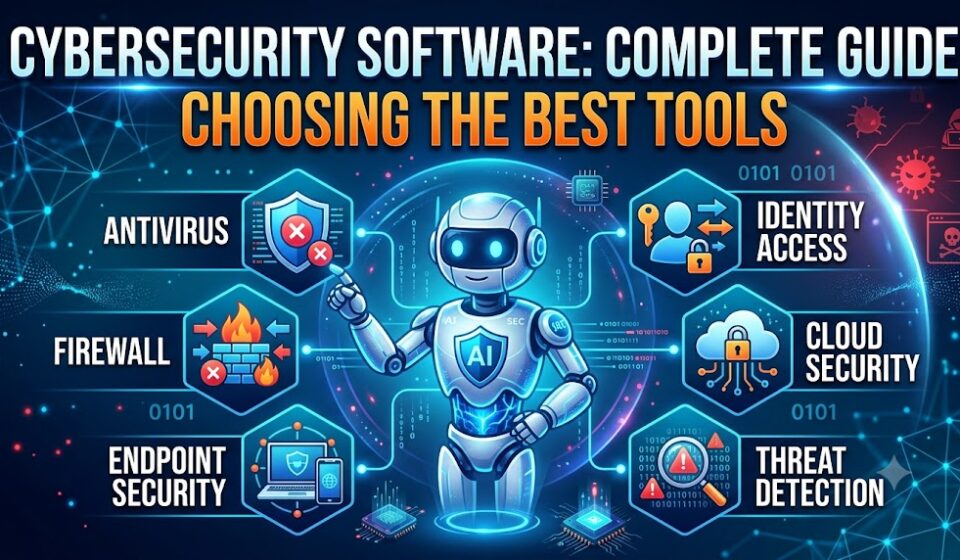
1. Antivirus Software
Antivirus software is one of the most common cybersecurity tools. It scans devices for malicious files and removes harmful programs.
Features include:
- Real-time virus protection
- Malware scanning
- Automatic updates
- Threat removal
Antivirus software is useful for individuals and small businesses.
2. Firewall Software
Firewall software controls incoming and outgoing network traffic. It creates a security barrier between trusted networks and unknown sources.
Firewalls help prevent:
- Unauthorized access
- Network attacks
- Suspicious connections
3. Endpoint Security Software
Endpoint security protects devices connected to a network, including:
- Laptops
- Desktop computers
- Smartphones
- Servers
Businesses use endpoint security solutions to monitor devices and prevent cyber threats.
4. Identity and Access Management Software
Identity and Access Management (IAM) software controls user permissions and account access.
Important features include:
- Multi-factor authentication
- User identity verification
- Access control
- Password management
IAM solutions help prevent account hacking and unauthorized access.
5. Cloud Security Software
As businesses move their operations to cloud platforms, cloud security has become essential.
Cloud security software protects:
- Cloud applications
- Cloud databases
- Online storage
- Virtual servers
It helps organizations maintain data security in cloud environments.
Features of Modern Cybersecurity Software
Advanced cybersecurity software includes several powerful features:
Real-Time Threat Detection
The software continuously monitors systems and detects suspicious activities immediately.
Artificial Intelligence Security
AI-powered cybersecurity tools analyze patterns and identify threats faster than traditional methods.
Automated Response
Some security platforms automatically isolate infected devices and stop attacks.
Security Reports
Businesses can generate security reports to understand risks and improve protection.
Data Encryption
Encryption protects sensitive information by converting it into a secure format.
Best Cybersecurity Software for Businesses
Businesses require advanced security solutions to protect important data and operations.
Popular categories include:
- Enterprise antivirus solutions
- Endpoint protection platforms
- Network security tools
- Cloud security platforms
- Threat intelligence software
- Security monitoring systems
Large organizations often combine multiple cybersecurity tools for complete protection.
Cybersecurity Software for Small Businesses
Small businesses are common targets for cyber criminals because they may have limited security resources.
Important security software for small companies includes:
- Antivirus protection
- Firewall solutions
- Password management tools
- Backup software
- Email security systems
- Employee security training platforms
Affordable cybersecurity software can help small businesses prevent costly security incidents.
How to Choose the Best Cybersecurity Software?
Before selecting security software, consider these factors:
Security Features
Check whether the software provides protection against malware, ransomware, phishing, and data theft.
Ease of Use
A good security solution should be easy to install and manage.
Compatibility
Ensure the software works with your operating system and existing technology.
Performance Impact
Security software should protect your device without slowing down performance.
Customer Support
Reliable technical support is important during security emergencies.
Future Trends in Cybersecurity Software
The cybersecurity industry is evolving rapidly with new technologies.
Future trends include:
- AI-powered threat detection
- Automated cybersecurity systems
- Zero Trust security models
- Cloud-native security platforms
- Advanced identity protection
- Machine learning-based security
Artificial intelligence will continue improving the ability of cybersecurity software to detect and prevent attacks.